The ADKAR Framework for AI Adoption: A Founder's Guide to Change That Actually Sticks
Most AI rollouts fail because founders skip straight from "buy the tool" to "host a training." The ADKAR change-management model explains exactly which steps get skipped, backed by real 2026 adoption data.
Most AI rollouts follow the same three steps: buy the tool, announce it in a Slack message or an all-hands, schedule a training session. Three months later, usage logs show a third of the team logging in once and never coming back. The founder's instinct is to blame the tool or blame the people. The actual problem is that "announce it" was never a change-management plan, it just looked like one.
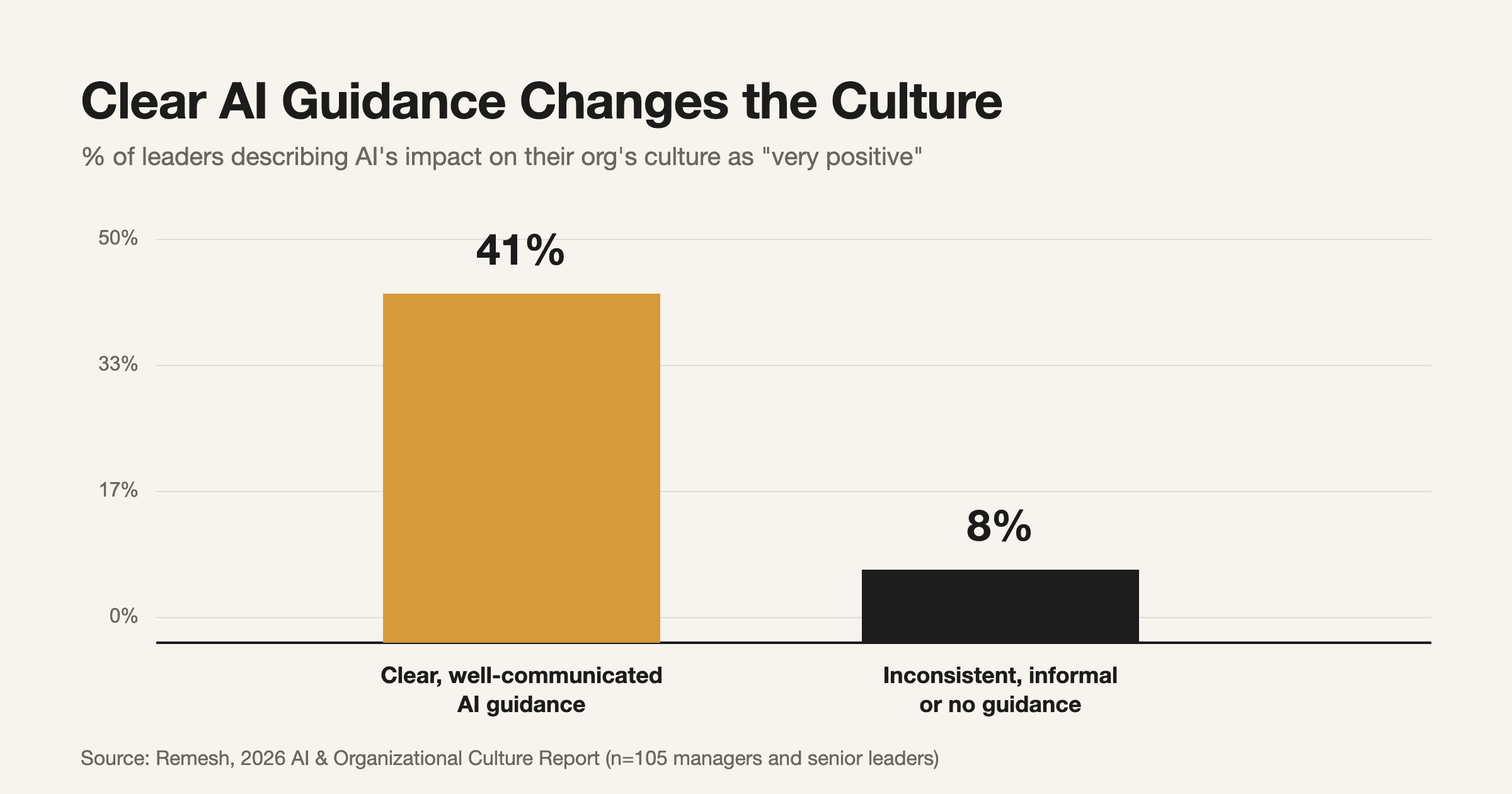
A 2026 survey by Remesh of 105 managers and senior leaders found that 75% report growing or widespread AI adoption inside their organization, but only 44% have clear guidance in place for how employees should actually use it. The other 56% are running on guidance that's inconsistent, informal, or doesn't exist. That gap isn't just a paperwork problem — Remesh's research found organizations with clear, well-communicated AI policies are roughly six times more likely to describe AI's impact on their culture as "very positive" than those without one.
The Announcement Isn't the Change
Here's the mental model most founders are working from, even if they'd never say it out loud: change happens when people are told about it. That's not how individual behavior change works, and it's the reason a well-funded AI rollout can still stall at 20% adoption while a cheaper one sticks.
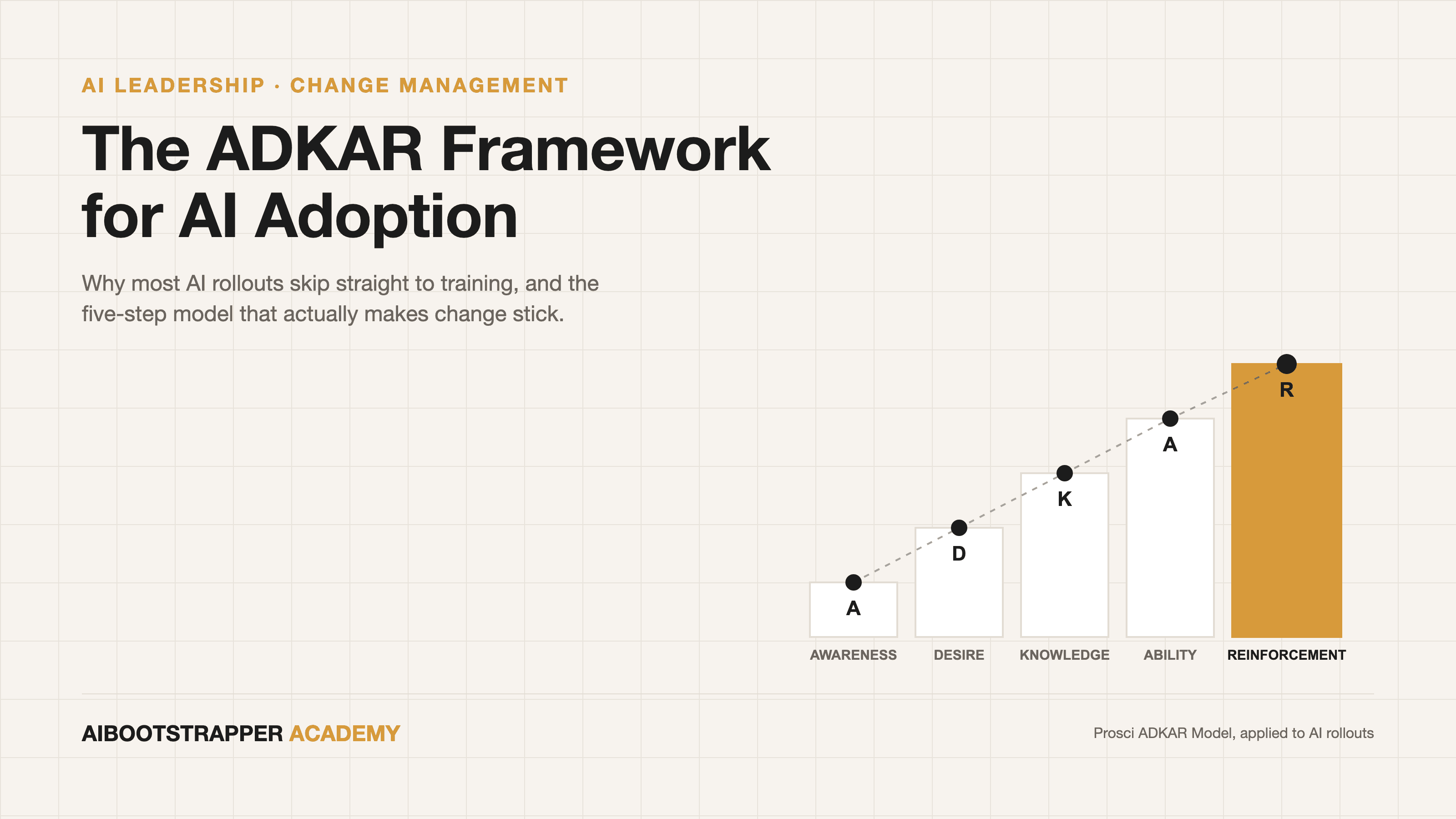
The most widely used framework for this problem wasn't built for AI at all. Prosci's ADKAR model, developed to manage change initiatives of every kind — mergers, system migrations, process overhauls — breaks individual change into five sequential building blocks: Awareness, Desire, Knowledge, Ability, and Reinforcement. Prosci's own guidance is explicit that the model applies directly to AI-driven change, noting that "the ADKAR elements are sequential but not linear, and as AI capabilities or workflows evolve, people's needs may shift." Skip a block, and the ones built on top of it have nothing to stand on.
What Each Letter Actually Requires
- **Awareness** — understanding why the change is needed and what happens if it doesn't happen. Not "we're rolling out Claude," but the actual business reason: the task it replaces, the time it saves, the competitive pressure behind it.
- **Desire** — a personal decision to participate, not a mandate to comply. This is where "what's in it for me" either gets answered honestly or gets ignored, and employees quietly decide the tool is optional.
- **Knowledge** — knowing how to use the tool and what good output looks like. This is the step most rollouts jump straight to, skipping the two before it.
- **Ability** — demonstrated capability, not just completed training. Watching a demo and successfully using the tool inside a real, messy workflow are different skills.
- **Reinforcement** — the mechanisms that make the new behavior stick instead of quietly reverting once the novelty wears off.
Most AI rollouts start at step three. A training session is Knowledge. It cannot do the job of Awareness or Desire, and without them, people attend the training, nod, and go back to doing the task the old way the moment nobody's watching.
Why Skipping to Training Is the Default Mistake
Training is the easiest step to buy. You can schedule a vendor demo, a Loom walkthrough, or a workshop in an afternoon. Awareness and Desire are harder because they require a founder or a manager to actually make the case, person by person, team by team, for why this specific change matters to this specific person's job — and that doesn't scale the way a calendar invite does.
Gallup's 2026 workplace research on AI adoption found exactly this pattern playing out at scale: when employees strongly agree that leadership has communicated a clear plan for integrating AI, they are three times as likely to feel very prepared to work with it and 2.6 times as likely to feel comfortable using it in their role. Preparedness and comfort are Awareness and Desire outcomes. No amount of additional tool training moves either number if the plan behind the rollout was never actually communicated.
This is also why a rollout can look identical on paper — same tool, same training deck, same launch date — and land completely differently across two teams. The team whose manager explained why this mattered to their specific workload got Awareness and Desire before Knowledge ever showed up. The team that got "here's the login, here's the Loom" did not.
Reinforcement Is the Step Nobody Budgets For
Even a rollout that nails the first four steps can still erode within a quarter if nothing reinforces the new behavior. This is the mechanism behind what we've written about separately as the middle-manager bottleneck: without a named process for validating AI-assisted work, reviewing it quietly becomes an unbudgeted tax on the one person positioned to catch it, and the path of least resistance is to quietly go back to doing it the old way.
Reinforcement in practice looks unglamorous: a recurring five-minute check-in on what's working and what isn't, a visible leadership habit of using the tool themselves (not delegating it entirely), and a short, written answer to "what happens if I just... don't use this." Without an answer to that last question, the honest answer defaults to "nothing," and nothing is a very strong incentive to revert.
A Practical ADKAR Checklist Before Your Next AI Rollout
- Write one paragraph, per team, on why this specific change matters to their specific work — not a company-wide memo, a team-specific case (Awareness).
- Ask, don't assume: have a real conversation with at least one skeptical employee about what's in it for them before launch (Desire).
- Delay the training session until the above two exist. Training is cheap to re-run; a failed first impression is not.
- Follow training with a real task inside a real workflow within the first week, not a sandbox exercise (Ability).
- Put a recurring check-in on the calendar before launch day, not after adoption stalls (Reinforcement).
- Write down, honestly, what happens to someone who doesn't adopt the tool — and make sure the real answer isn't "nothing."
None of this requires a bigger budget than the training-only version most founders default to. It requires sequencing the same effort differently, and being willing to spend time on the two steps — Awareness and Desire — that don't show up on an invoice.
If you're the one deciding how AI gets rolled out across your team, AI Leadership for Founders goes deeper into the adoption playbook this post only introduces — the decision-rights framework for who approves what, how to sequence a rollout across teams with different readiness levels, and the specific policy groundwork (covered in more detail in our piece on building an AI tool approval process) that turns Awareness and Desire into something more durable than a one-time announcement.
Go deeper
AI Leadership for Founders
Want the full AI Leadership for Founders course, not just this post?
Join the waitlist and get a 20% launch discount the moment we open checkout. No payment now.
Taught by Aditya Jha · 40+ AI products shipped for real clients. No spam, unsubscribe any time.
Or join our free community for AI tips while you wait
One email a week: the AI tools, tactics, and course drops actually worth your time. No spam, unsubscribe anytime.
Questions about this or which course fits? Email academy@aibootstrapper.com and we'll answer it directly, not with a support ticket.