GEO vs SEO: What Actually Changes When AI Answers the Question Instead of Google
Search engine optimization got you ranked in a list of blue links. Generative engine optimization gets you cited inside the answer itself. Here is what that actually requires.
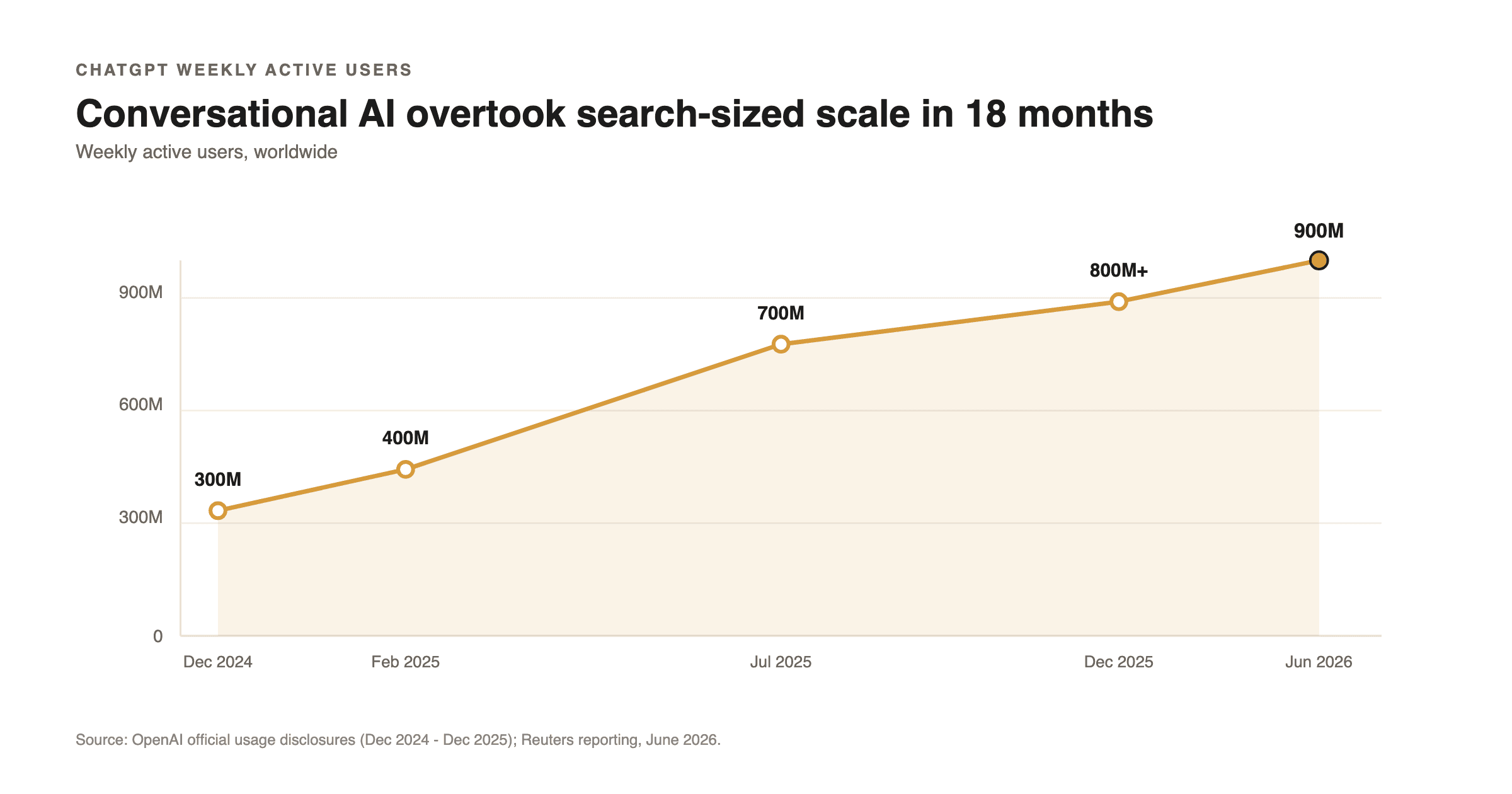
For twenty years, ranking well meant one thing: get your page into the first ten blue links, then earn the click. That job has not disappeared, but a second, different job has shown up next to it: get your specific claim quoted inside the answer an AI gives, whether or not anyone ever clicks through to your page at all.
That second job is what people mean by GEO, generative engine optimization, sometimes also called AEO, answer engine optimization. It is not SEO with extra steps. It rewards a genuinely different kind of writing.
The core difference: ranking a page versus citing a claim
A search engine ranks whole pages against a query using hundreds of signals, and a human then scans the results and picks one. An AI answer engine does something structurally different: it reads across many pages, extracts specific claims, and stitches an answer together, citing the sources it pulled from. Your page is not competing to be the one result someone clicks. It is competing to be the one sentence someone's answer quotes.
That changes what "good content" means.
What actually gets cited: clear, structured, checkable claims
AI answer engines cite content that is easy to lift out of context and still be true and specific. In practice that means:
- Named entities instead of vague pronouns. "AIBOOTSTRAPPER's team built the automation" is citable. "Our team built the automation" is not, once it is pulled out of the page it came from.
- A specific, standalone claim near the top of the section, not buried in the fourth paragraph after three paragraphs of throat clearing.
- Structured data (schema.org markup) that describes what the page actually is: a Course, an Article, an FAQ, a Product. This gives the crawler an explicit, machine readable signal instead of asking it to infer structure from prose.
- Numbers and specifics over adjectives. "Fast" is not citable. A specific, real number is.
What GEO does not mean: keyword stuffing with extra steps
The instinct a lot of marketers have when they hear "AI now reads content differently" is to stuff more keywords in, just aimed at a different reader. That is exactly backwards. AI answer engines are, if anything, better than traditional search at penalizing content that reads like it was written for an algorithm instead of a person, because the model itself has to parse the sentence to decide whether to trust it. Vague, keyword dense copy is harder for a model to extract a clean claim from, not easier.
Write the true, specific, well structured version of the page. That is the same page a human would trust more too.
The practical checklist
Before you publish anything you want an AI answer engine to be able to cite, check for these five things:
- Does the page have a clear, named subject in its first two sentences, not just a pronoun?
- Is there at least one specific, standalone claim that would still make sense if it were the only sentence quoted from the whole page?
- Does the page have schema.org structured data matching what it actually is?
- Could a fact checker verify the specific claim independently, or is it just a confident sounding adjective?
- Is the page's most important claim in the first third of the content, not the last?
What to measure instead of just rankings
Rank tracking tools tell you where you sit in a list of blue links. They do not tell you whether ChatGPT, Perplexity, or Google's own AI Overviews are citing your page inside their answers. Start manually checking: ask the actual questions your buyers ask, in the actual tools they use, and see whether your brand or your specific claim shows up in the answer, with or without a link. A mention with no click is still a real trust signal, and for a lot of buying decisions, it is the moment they first hear your name.
GEO is not a replacement for SEO, the two overlap heavily, and a well structured, genuinely well written page tends to do well at both. But if you are only optimizing for the ranking algorithm you can see in a rank tracker, you are optimizing for half the game that is actually being played in 2026.
Go deeper
The AI Marketing Engine